

DESCRIPTION
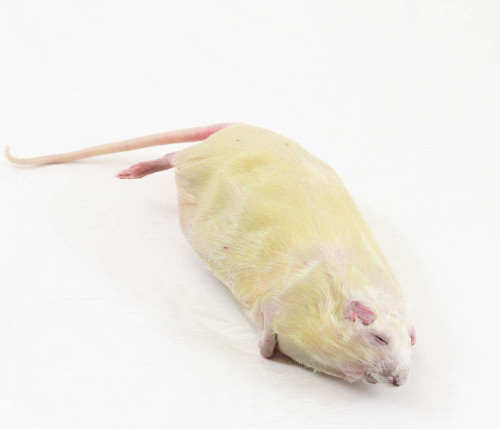
Dissecting a rabbit is an excellent and insightful way for middle and high school students to learn about mammal anatomy! A rabbit specimen provides a herbivore alternative to other large mammal specimens, such as a cat.
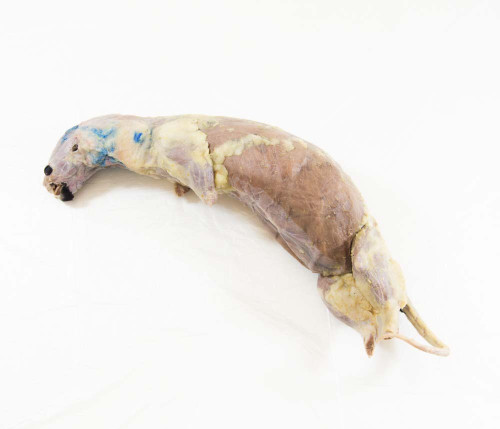
Explore the anatomical features of a rabbit through a memorable, hands-on rabbit dissection! This high-quality rabbit specimen is farm-raised and double injected - with red latex injected into the arteries and blue latex injected into the veins - to more easily trace the vascular system.
Each rabbit dissection specimen comes with a free, 25-page Rabbit Dissection Guide (a $8.95 value). The rabbit genus for this specimen varies.
Much can be learned when studying a rabbit specimen from the different points of view: ventral, dorsal, anterior/cranial, and posterior/caudal.
As they peer into the body and abdominal cavity of a rabbit, students can learn more about a mammal's many complex body systems:
- Finding, identifying, and exploring parts such as the esophagus, stomach, small intestine, and large intestine provides insight into the mammalian digestive system.
- Finding, identifying, and exploring muscles such as the pectoralis major, latissimus dorsi, triceps, rectus abdominis & femoris, acromiotrapezius, vastus medialis, adductor magnus, spinotrapezius, and gracilis provides insight into the mammalian muscular system.
- Finding, identifying, and exploring parts such as the aorta, heart, and the vast amount of arteries and veins in a rabbit's body provides insight into the mammalian cardiovascular system.
- Finding, identifying, and exploring bones such as the clavicle, scapula, thoracic vertebrate, and sternum provides insight into the mammalian skeletal system.
- Finding, identifying, and exploring parts such as the ureter, ovaries, kidneys, and urinary bladder provides insight into the mammalian urogenital systems.
- Finding, identifying, and exploring parts such as the spinal cord provides insight into the mammalian nervous system.
- And the discoveries don't stop there!
Note: Specimens are initially preserved with a formaldehyde solution, the best animal tissue fixative. The formaldehyde is then displaced first with water and finally with a glycol solution to produce a moist, low-fume specimen which will not decay over time.
HST Specimen Guarantee
In sealed, original packaging, our preserved specimens are guaranteed to remain fully preserved and free of decay for six months from the date of purchase.
Once the original package is opened, use specimen within one month. For best results, observe the following storage procedures:
- Store specimen in heavy-duty, zip-lock bags to minimize drying between dissections.
- Specimen will slowly dry out or become contaminated in zip-lock bags; add a teaspoon of Specimen Holding Fluid to retain moisture.
- Freezing or refrigeration is not necessary and may damage fragile tissues.
 WARNING: This product can expose you to chemicals including Formaldehyde, which is known to the State of California to cause cancer, and Methanol, which is known to the State of California to cause birth defects or other reproductive harm.
MORE INFORMATION BOX
More Information
CONTENTS TAB
SPECIFICATIONS TAB